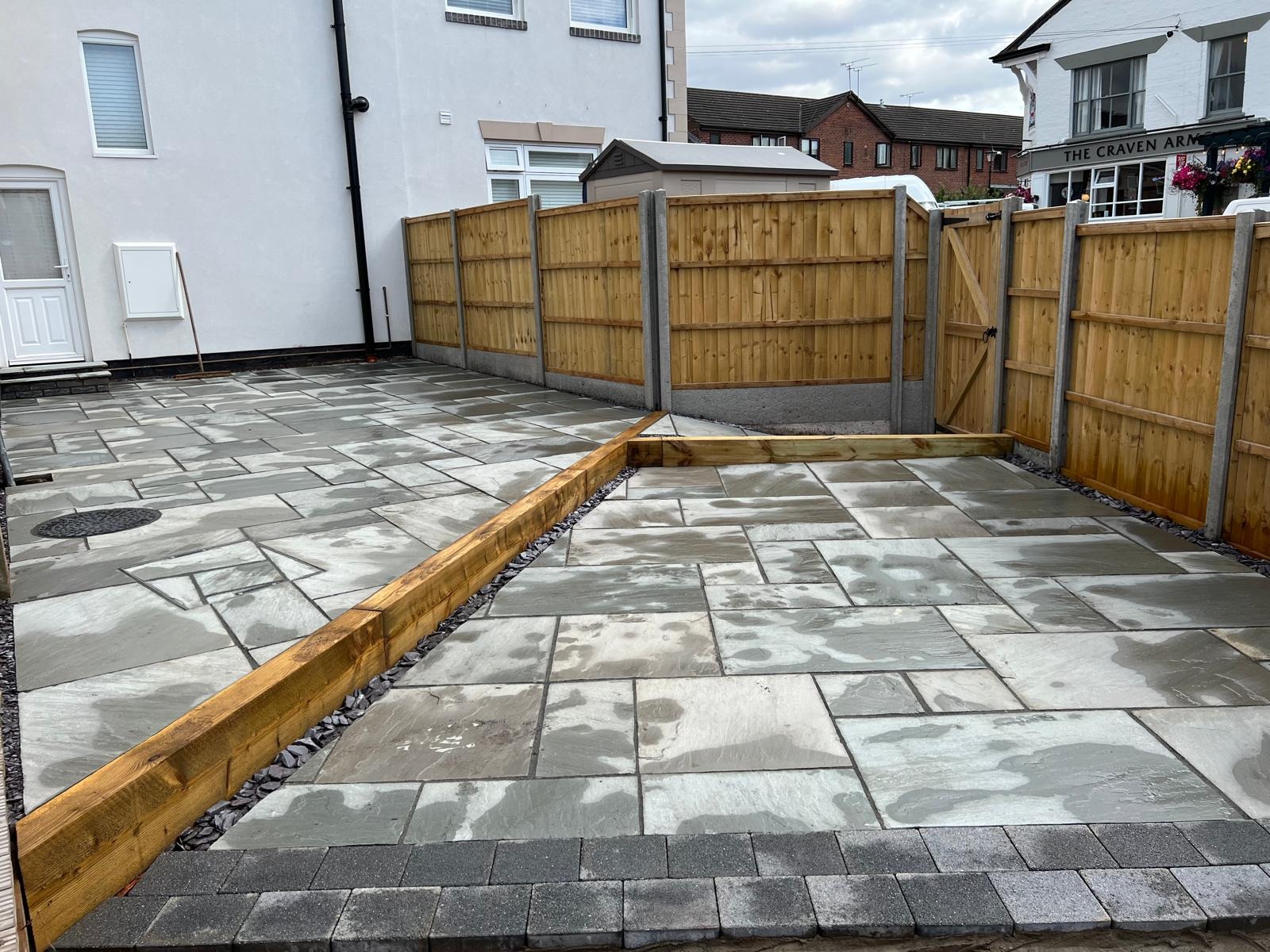
Flat underfoot, for years
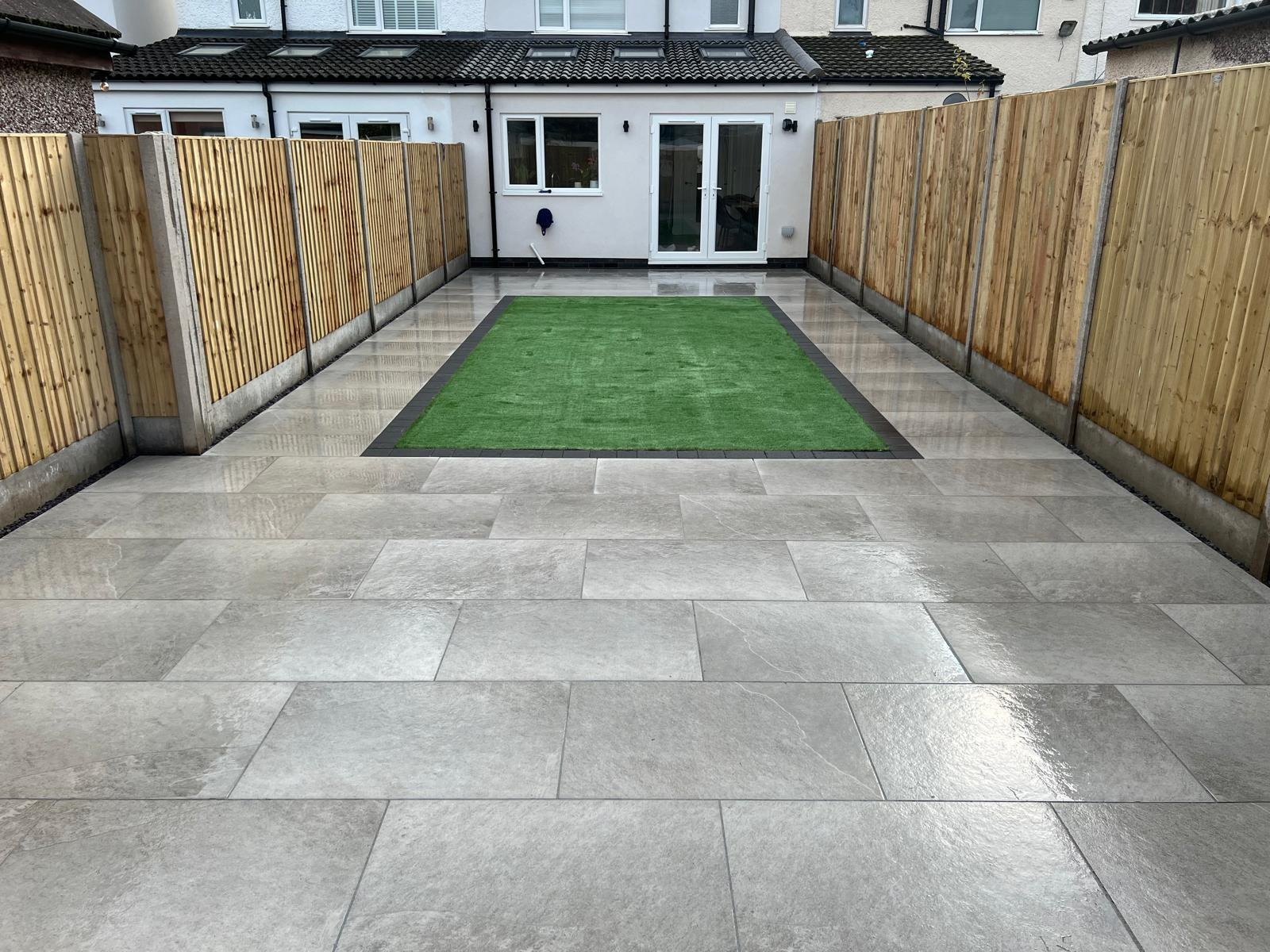
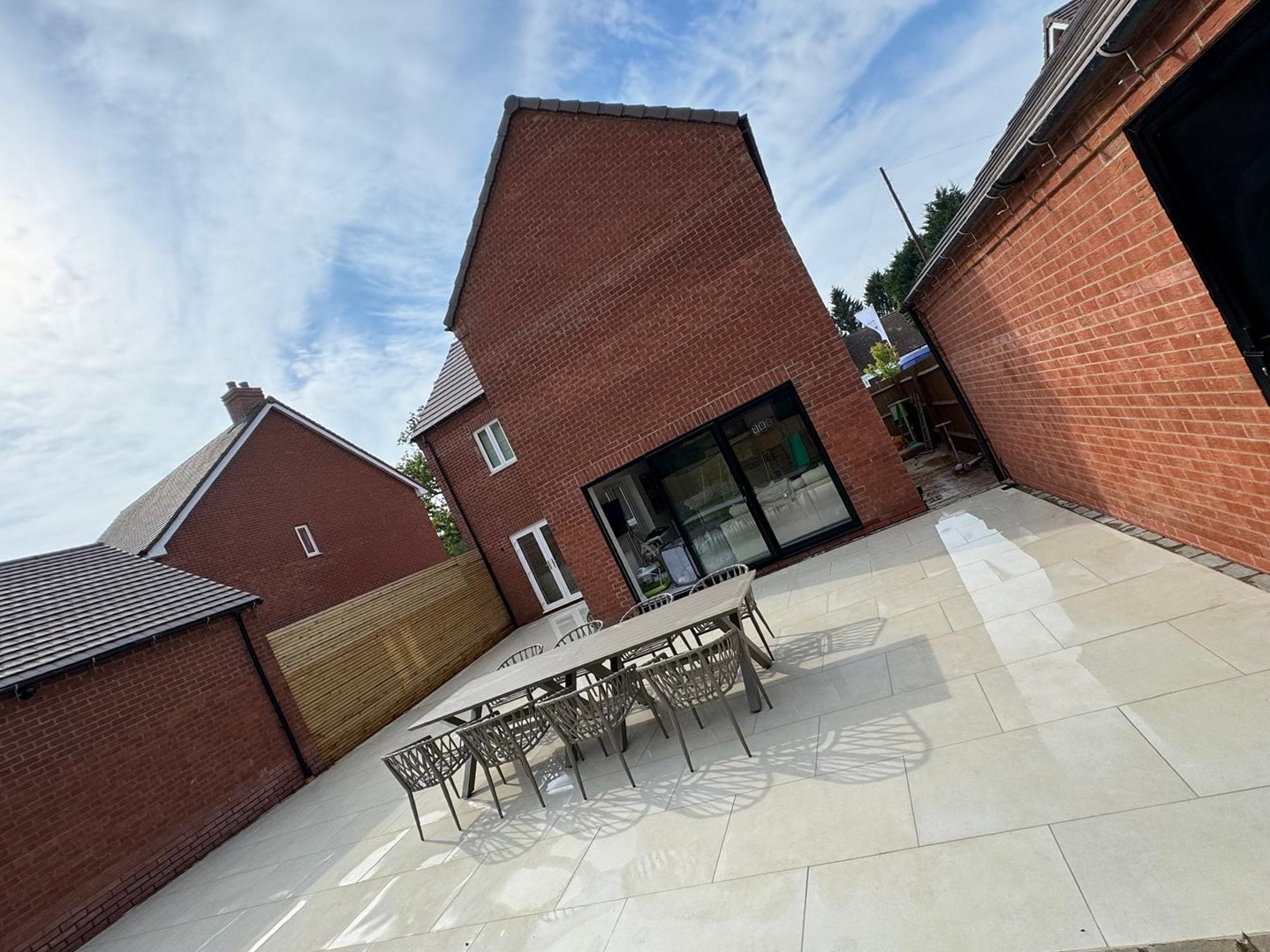
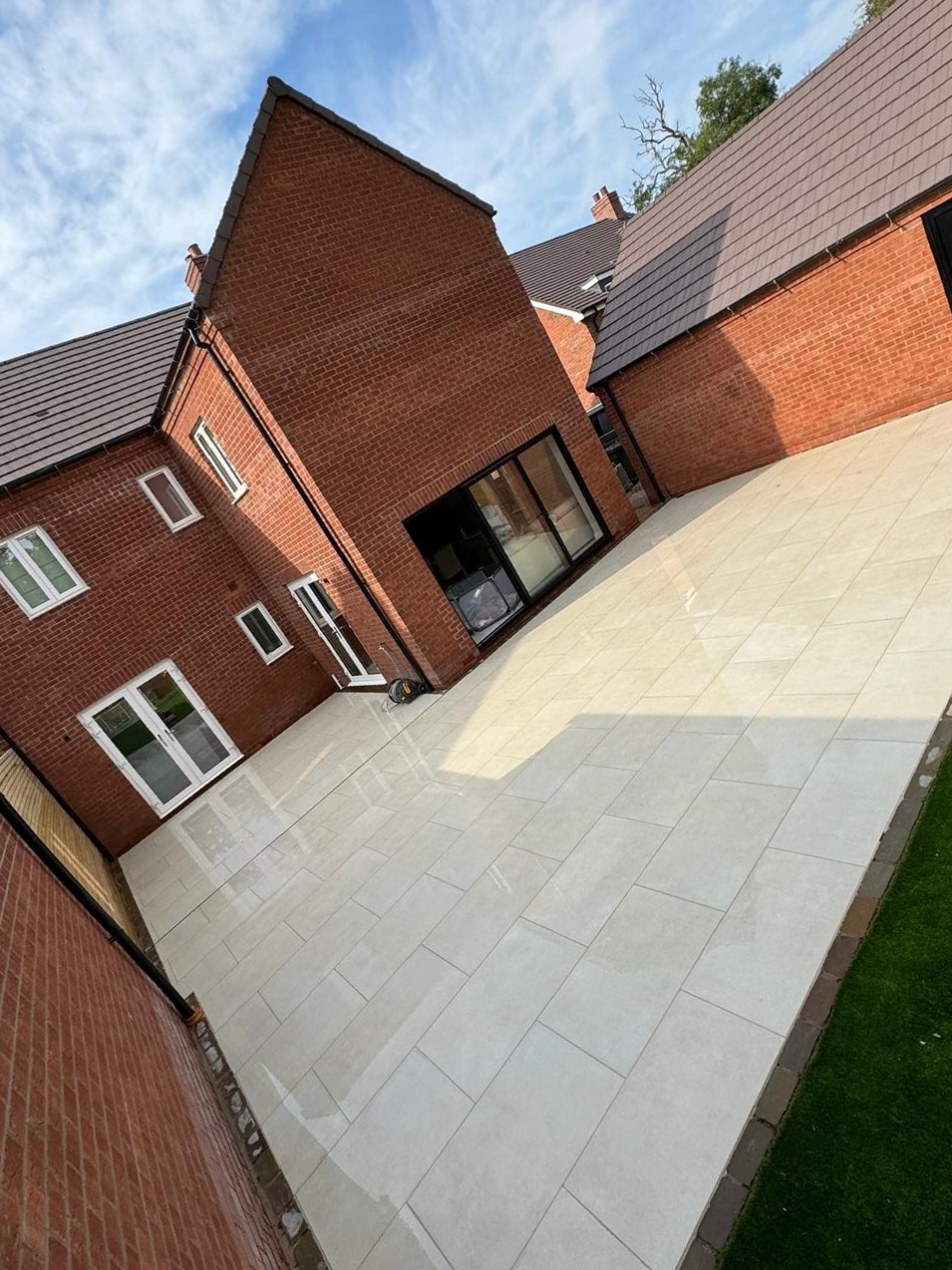
A compacted sub-base and full mortar beds mean no rocking slabs, no sunken corners and no wobbling table legs.

A level, well-drained patio with tight joints and clean cut lines: priced as a fixed figure before we start, built by a team of at least two, and finished on dates agreed with you up front.
Quotes usually the same or next day locally · 48 hours at the latest
10 years in the trade
5 of them running SOS Landscaping
Checkatrade approved
CHAS accredited
Fixed price on ~95% of jobs
Agreed in writing before we start
Quotes within 48 hours
Free, and based on seeing the garden
Never a one-man job
Always a team of two or more on site
A patio is a small piece of civil engineering with slabs on top. Most of the work you will never see: setting levels and falls, digging out to the right depth, compacting a sub-base in layers, then bedding each slab onto a full mortar bed so there are no hollow spots underfoot. Get that right and the surface stays flat, drains away from the house and takes furniture, foot traffic and frost without moving.
We lay sandstone, limestone, porcelain, granite setts and riven or sawn natural stone, along with matching steps, edgings and paths that tie the patio back to the house, the side gate, the shed or the lawn. Paths are treated with the same care as the patio: proper edge restraint, consistent widths and joints that line through rather than wandering.
This work suits you if your existing paving has sunk, cracked or gone green and slippery, if the garden has never had a usable seating area, if a new extension or set of bifold doors has left the outside looking unfinished, or if you want the whole layout rethought so the space actually gets used in the evening sun rather than at nine in the morning.
The reason to bring in a professional is not the slab laying. It is the levels, the drainage falls, the depth of the dig, the compaction of the sub-base and the detailing around thresholds, drains, manholes and walls. Those are the decisions that decide whether the patio still looks right in ten years.
Paving laid on sand, dabs of mortar or an under-compacted base is the single most common problem we are called out to fix. Slabs rock, corners sink, joints crack open, and water sits in dips instead of running off. Once water gets under paving it moves the bed around every time the ground freezes, and the surface only gets worse from there.
Falls are the other frequent mistake. If the paving drains back towards the house instead of away from it, water is being delivered to the wall, and if the finished surface sits too high against the brickwork, it can bridge or cover the damp-proof course. That is not a paving problem any more; it becomes a damp problem inside the house, and it is far more expensive to put right than the patio ever was.
The costs escalate quietly. A patio that has moved rarely gets patched successfully, because relaying a few slabs does not fix the base beneath them. In most cases the paving has to come up and the sub-base has to be rebuilt, which means paying for the same job twice, and losing the materials you bought the first time.
Guy walks the garden with you, checks access, ground conditions and where water needs to go, and talks through layout and material options. Because materials are bought by you, that advice is about what suits the space and your budget.
You get a free quote, usually the same or next day locally, and inside 48 hours at the latest. Around 95% of jobs are quoted as a fixed price so the figure does not move once work starts.
Start dates and a rough duration are agreed before anyone lifts a spade. We then dig out to depth, deal with spoil, and set the levels and falls so drainage runs away from the house.
Sub-base laid and compacted in layers, then slabs bedded onto a full mortar bed, cut cleanly where they meet walls, drains and steps, with joints kept consistent across the whole area.
Joints pointed or jointed to suit the material, the site swept and cleared, and a proper walk-round with you at the end. If anything needs attention later, one call and Guy comes back to put it right.
A compacted sub-base and full mortar beds mean no rocking slabs, no sunken corners and no wobbling table legs.
Falls are set to move water off the paving and away from the house rather than towards it.
Even surfaces with no ponding and no lifted edges mean fewer trip hazards and less standing water to freeze.
Building the base correctly the first time avoids the far bigger bill of lifting and relaying later.
A fixed price agreed up front on around 95% of jobs, plus staged payments on larger work.
The person who quoted your garden is on site building it, with at least one other pair of hands: never a solo operation.
Indian sandstone remains the most popular choice locally: warm tones, forgiving to cut and cost-effective for larger areas. Porcelain has taken over for contemporary schemes because it is dimensionally accurate, barely stains and keeps its colour, though it needs a slurry primer and precise setting out to look right. Limestone gives a flatter, more uniform surface, granite setts and cobbles suit edgings and drive borders, and riven stone still looks best on period cottages around Kenilworth and Warwick.
Format matters as much as the stone. Single-size slabs laid in a stack or stretcher bond read as calm and modern; patio packs in mixed sizes suit traditional gardens and awkward shapes; plank formats stretch a narrow space visually. We will tell you honestly which one is going to look right in your garden and which is going to fight it.
Excavation depth is dictated by the build-up, not by habit: a domestic patio typically needs a compacted MOT Type 1 sub-base and a full mortar bed, with more depth again where a path will carry a vehicle. Sub-base goes down in layers and is compacted between them, because one thick layer never compacts through.
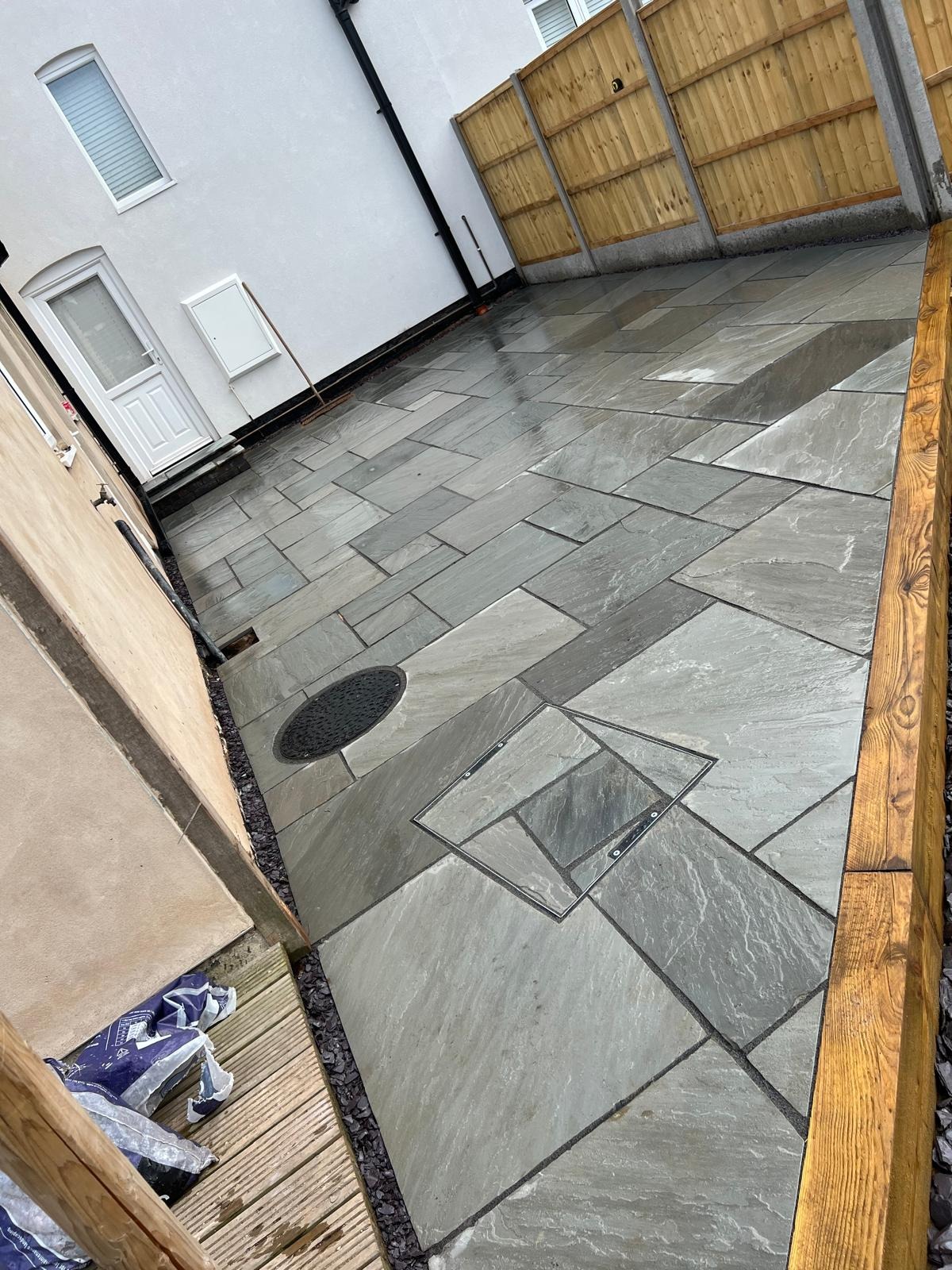
Slabs are laid on a full bed rather than spot dabs, so there are no voids to crack over. Cuts around walls, drains, manhole covers, tree roots and step nosings are made properly rather than filled with mortar, and joints are set consistently so the eye reads a grid instead of a patchwork. Pointing is chosen to suit the material: brush-in jointing compound where it suits, hand-pointed mortar where it does not.
Levels are worked from the house down. Thresholds, air bricks and the damp-proof course set the maximum finished height; from there we build in a fall across the paving to a soakaway, drain, gravel margin or lawn edge so surface water has somewhere to go on a heavy Warwickshire winter day.
Not every job is a rectangle by the back door. Common variations include a seating terrace positioned away from the house to catch evening sun, stepping-stone paths through lawn, a full-width terrace across the back of an extension, side-return paths from the front gate to the back garden, bin and shed bases, and a paved apron in front of a garage.
Sloping gardens usually need paving combined with steps or a low sleeper retaining wall to create one usable level, which is why patio and sleeper work is so often quoted together. Where a patio meets a lawn, a flush edge lets a mower run over it; where it meets planting, a slightly raised edge keeps soil off the stone.
Residential gardens make up the bulk of this work, but the same build-up applies to small commercial areas such as pub and cafe seating or an office courtyard. The differences there are usually access, working hours and slip resistance rather than the construction itself.
Based at 24 Common Lane, Kenilworth. Local work gets priced fastest: often the same day. Just outside these areas? It is still worth a call.
See all services, read about Guy Finch, our Kenilworth landscaper or check the landscaping areas covered in Warwickshire.
It depends on size, access, ground conditions and how much spoil has to be removed, which is exactly why we quote after seeing the garden rather than from a rate card. Around 95% of jobs are quoted as a fixed price, so you have one figure in writing before anything starts. Materials are bought by you, so you see exactly what the stone costs with nothing added on top.
A typical domestic patio is a matter of days rather than weeks, but the honest answer comes with the quote: the dig-out, spoil removal and any steps or walls affect it far more than the paving itself. You get a start date and a realistic duration before work begins, not after.
Materials are purchased by you, the customer. Guy advises on which stone, size and finish suits the space and the budget, then you buy them. It keeps pricing transparent and means there is no hidden margin on materials.
Occasionally, if the existing base is genuinely sound and the extra height does not push the finished level too close to the damp-proof course. More often the old paving needs to come up so the base can be built properly; we will tell you which situation you are in at the quote stage instead of finding out halfway through.
Falls are set as part of the build so water runs off the paving and away from the house, to a drain, soakaway, gravel margin or lawn edge. Where a garden is flat or sits low, we discuss the drainage route with you before pricing rather than assuming.
We stand behind our work. If anything ever needs attention after we have finished, give Guy a call and he will come back and put it right.
SOS Landscaping is Checkatrade approved and CHAS accredited, and Guy has ten years in the trade with five of those running the business. Jobs are always carried out by a team of at least two.
On smaller jobs, payment is made on completion. On larger jobs, payments are staged: one at the end of the first week and the balance on completion.
Paving can be laid across most of the year; hard frost and sustained heavy rain are the limiting factors rather than the season. Spring and summer book up fastest locally, so it is worth getting a quote in before the diary fills.
Yes: Leamington, Warwick, Coventry, Balsall Common, Chadwick End, Knowle, Earlsdon and Leek Wootton are all covered. Local work gets priced fastest, often the same day, and if you are just outside those areas it is still worth a call.
Send Guy a few details about the space, your budget and your timings, and you will have a free, no-obligation quote, usually the same or next day locally, and inside 48 hours at the latest.
Prefer to talk it through?
07466 254430finchfinishings@gmail.com
Hours: 7:00am – 6:00pm
Free quotes · Fixed prices · Checkatrade approved · CHAS accredited